- WE SAVE LIVES
- info@wesavelives.org

 English
 Arabic
 Chinese (Simplified)
 Chinese (Traditional)
 Dutch
 Filipino
 French
 German
 Italian
 Korean
 Portuguese
 Russian
 Spanish
 Vietnamese
Grief Doesn’t Take a Holiday

Coping with Grief During the Holidays
November 6, 2024
Grief comes in 3 phases: the beginning, the middle and the rest of your life — Candace Lightner
As we approach the holidays, I see more and more people posting remembrances on our Facebook pages. This year, our grief is compounded by world and local catastrophes, violent invasions, political differences, partisan divisions, and so much more. Every day, the headlines bring more bad news than good, reminding us how fragile life is.
I will never forget the first holidays after Cari died. She was killed just before Mother’s Day, and I remember how impossible it was for me to function that day. I didn’t want any of the affection given to me by my two remaining children. I didn’t want breakfast in bed or Mother’s Day cards; I just wanted to crawl into a hole and not feel any more pain.
Thanksgiving was even worse. I was divorced, and my ex had remarried, so it was just going to be Serena, Travis, and me. My ex hardly ever wanted the children over the holidays, although he was entitled to every other one. However, the first Thanksgiving after Cari died, he suddenly wanted both surviving children with him and his wife. This would leave me alone. I thought it was very cruel. He had his wife and her family to share the holiday with, and I only had my children. Now I had no one.
That doesn’t mean my friends didn’t invite me over, but, in my opinion, spending the holidays with someone else’s family after your child has died is more painful than spending them alone. I decided to go to Carmel-by-the-Sea and stay, but I was miserable. I was so happy when the kids called me the next day and asked me to come home because they, too, were miserable and wanted to be with me. Tee hee.
The first Christmas wasn’t any better, although I have always loved this holiday. I couldn’t believe it when the district attorney sent me an envelope with her bloody clothes inside. I received it right after we decorated the tree. It included a form letter telling me that now that the case had been resolved, her clothes were no longer needed as evidence. I broke down, sobbed, then got angry and called them up and gave them a piece of my mind for their insensitivity.
The holidays are an especially difficult time for those of us whose loved ones have died, no matter the circumstances. I personally think it’s even worse when those tragedies and anniversaries occur around this time of year, or any holiday for that matter.
All this to say that while some days were tolerable, most (especially in the beginning) were not. The only way I managed to get through it was by taking each day, one step at a time.
I would like to share some things I have learned over the years that have helped me and those I work with who are also grieving. Some of what I am sharing comes from the grief facilitation work I do and what I learned while researching my book. We interviewed hundreds of people and attended a number of grief conferences. I have also faced numerous losses in my own life. I often feel like I have become an unintended “expert” in grief.
First, grieve and then grieve some more. One of my former Advisory Board members, Dr. Linda Tucker (who has since passed away), told me that “what often prevents people from feeling the depth of whatever it is they’re feeling is that they’re afraid they’ll get stuck there.”
I say, quit worrying about how long it has been. In my humble opinion and experience, there is no such thing as the five stages of grief. My book breaks grief down into three stages: the beginning, the middle, and the rest of your life.
Second, share your feelings, especially with anyone who has a good heart and is willing to listen. Talk about your child, parent, partner, or friend. Share your memories, and by all means, remember them. Hope Edelman states in her book, The After Grief: Finding Your Way Along the Long Arc of Loss, that “the story of a shared life, after all, is much richer and more elaborate than the story of how a life ended.”
Feel anger, if you are angry. Many of us are. Anger at the person who took your loved one’s life, anger at your loved one for dying, and, in my case, anger at the system that allowed my daughter’s killer to continue to drink and drive on a valid California driver’s license after numerous arrests and convictions.
Keep a journal if you think that will help. Write your loved one a letter saying the things you didn’t say when they were alive. We are all too familiar with the guilt and what I call the “if only syndrome.” If only I had waited and taken her to the carnival. If only I hadn’t let him drive. If only, if only.
We are not God, and we cannot control the universe, although heaven knows I have tried. It will all take time, but relief, or glimpses of it, does come in time. I had to keep telling myself I didn’t kill Cari. Clarence William Busch did.
Try not to ignore the holidays. Wrap a present for your loved one if it will make you feel better and put it under the tree. Light a candle and/or put a Christmas ornament on the tree in their memory. Perhaps, while you are having your holiday dinner, you could all share a story about your loved one that evokes a special memory or makes you laugh.
I found that traveling during the holidays didn’t help, but creating new traditions did. Do something special in your loved one’s memory. Perhaps, instead of having Christmas dinner, feed the homeless at a local shelter or contribute to a cause in their name. My family did that one Thanksgiving as our family started dwindling due to deaths and divorce. It helped us. Do what feels best for you. What I have learned is that giving helps me more than being given to.
If celebrating is simply too painful, then don’t. I skipped celebrating Mother’s Day, Thanksgiving, and Christmas the first year after Cari died. I give you permission to do the same. All those holidays will come again, and you can celebrate when and if you feel ready.
Make the most of symbolism. Every year on the anniversary of Cari’s death, I throw flowers into the ocean. If I am not near an ocean, I find a body of water, such as a stream or river. During COVID-19, two of my friends joined me, and with our masks on, we walked over to the bridge near my home and dropped roses into the water.
I no longer live near her grave, so I will also take flowers and put them on someone else’s grave where I now live. I also have flowers sent to her grave. All of this helps me feel closer to her and my memories of her.
Be open to the paranormal. I saw Cari after she died, and I was not alone. Those memories stay with me whenever I wonder how she is. I met many people in my interviews who also had after-death experiences with their loved ones. There were some fascinating stories, and it amazed me how many would start by saying, “You may think I’m crazy, or I have to tell you I am not religious, but . . .”
Elizabeth Bryan-Jacobs, We Save Lives Advisory Board member, art therapist and author with a passion for sharing pathways to our Loved Ones in Spirit, offers another perspective: “Candace’s experience of Cari is both profound – and very normal. We’ve been having these encounters since the beginning of time, and I’m grateful that Candace is sharing hers – it helps others know that connection is real – and possible.”
Ask for help if you need it. Grief is not a mental illness. It is a human response to loss. It is a normal part of life. Most of us grieve normally (whatever that is). We are not sick, and losing a loved one is something we never forget.
I want to upchuck every time I hear that word (“sick”) associated with grief. We don’t “heal” from grief. Grief is not an illness. Losing a loved one is a normal part of living. The loss stays with us. We may move forward, but it isn’t unusual to come back to it from time to time.
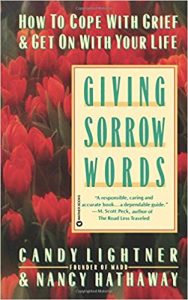 Grief is a gift that helps us cope with death. As we say in Giving Sorrow Words:
“Death takes away. That’s all there is to it. But grief gives back. By experiencing it, we are not simply eroded by pain. Rather, we become larger human beings, more compassionate, more aware, more able to help others, more able to help ourselves. Grief is a powerful alchemy. It plunges us into sorrow and forces us to face the finiteness of life, the mightiness of death, and the meaning of our existence on this earth.”
Remember that you are likely to have other family members who need you or who are grieving, too, so try to include them in your grief journey. I have lived this one.
Most importantly, take care of yourself. Get plenty of rest, pamper yourself when possible, and do something pleasurable. Watch a movie that makes you laugh. The movie Pretty Woman was my solace after my father died. It was the perfect antidote to all the pain I was feeling. I do believe in laughter, and the saying that laughter is the best medicine is true, at least for me. I understand that it takes a while for some of us to get to that point, but it has always helped me get through the darkest of times.
When we were at Cari’s funeral, the family sat behind the stage, and we could hear everyone sniffling. We couldn’t see anyone, but we could hear the sniffles. My ex-husband, who was very witty, turned to us all and said, “God, I wish I had the Kleenex concession.”
I cracked up, and I knew at that moment I would survive. Believe me, there were times when I didn’t think I would. That was a defining moment for me—that I could laugh in the midst of such unbearable pain. It meant that I was going to make it.
I hope this helps as you deal with this particular time of year. I still miss Cari. She loved Christmas, and I will always have the memory of her on the phone on Christmas Day, listening to her friends talk about their gifts and exclaiming with joy about what they were getting. Of course, she had to run right over to their homes so she could check them out.
She will always be with me, but now, instead of just focusing on how she died, I try to concentrate on how she lived and the joy she brought into our lives. I hope you can do the same—and if not yet, perhaps next year.
________________________________________
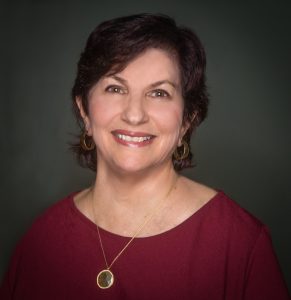
Candace Lighter, Founder
We Save Lives
Mothers Against Drunk Driving
Author, “Giving Sorrow Words: How to Cope with Grief and Get On with Your Life.”